>
7 Timeless Temple Jewellery Pieces of Antique Gold Jewellery

Temple jewellery is not just a style of decoration, it is a celebration of heritage, love, devotion, and craftsmanship. Among the myriad forms of traditional Indian jewellery, antique gold jewellery in the temple style stands out for its high cultural significance and complex craftsmanship. Deep rooted in the spiritual and creative traditions of South India, temple jewellery has transcended decades, adorning kings, queens, dancers, and brides alike. These gems, inspired by temple architecture and godly motifs, mirror an era where jewellery was not merely ornamental but an indicative gesture of faith and grandeur.

In this we explore seven temple jewellery pieces that have ruled for centuries, offering a best and perfect blend of history, elegance, and lasting appeal. Whether you are a bride being ready for your marriage, a collector of antique gold jewellery, or simply fascinated by India’s regal adornments, this guide will brighten the long lasting beauty of temple jewellery.

Traditional Manga Necklace

1. Manga Malai: The Mango Motif Necklace

The Manga Malai, also known as the Mango Mala, is an iconic South Indian temple jewellery necklace. Named after its distinctive mango- shaped motifs, this piece is a testament to artificer and design invention. Traditionally designed in gold, the mango motifs are frequently speckled with uncut diamonds, kemp stones, and plums, creating a striking mix of fineness and spirituality. 

The origin of the manga malai dates back to the Chola period, where it was worn by queens and  temple dancers to signify substance and godly grace. Now, brides favor heavier versions for marriages, partnered with a Kanjeevaram saree for a regal look, or conclude for simpler designs for reuse during special occasions. 

Wearing a Manga Malai is more than just a choice of fashion, it is an emotion and embrace of South Indian tradition, showcasing how antique gold jewellery amalgamates historical significance with aesthetic appeal.

Charming Traditional Lakshmi Necklace

2. Kasumala: The Coin Necklace of Royalty

It is also called Kasulaperu, is another celebrated temple jewellery piece, synonymous with wealth and godly blessings. Traditionally, this choker features a series of Goddess Lakshmi coins hanging together on a chain, often highlighted with kemp stones, uncut diamonds, and other valuable gemstones. The design releases luxury, making it a must have for South Indian newly wed focusing for a majestic bridal ensemble.

Historically, Kasulaperu was not just a piece of decoration but also a sign of wealth and spiritual devotion. The coins represented prosperity, while the goddess motif invoked blessings for fertility, health, and abundance.

In contemporary styling, brides can partner a long Kasulaperu with a smaller necklace for subtle elegance or select two-layered or pendant embedded designs for grandeur. The versatility of this necklace makes sure that it remains a treasured example of antique gold jewellery passed down through ages.
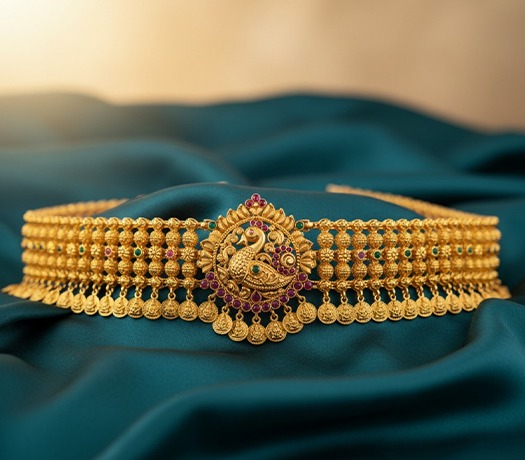
Gold Vadiyanam

3. Vadiyanam: The Majestic Waist Belt

The Vadiyanam, also known as the Oddiyanam, is an exquisitely crafted waist belt that incorporates South Indian bridal fineness. Traditionally worn around the waist to secure a saree or lehenga, it is decorated with complex pictures of deities, peacocks, flowery patterns, and gemstones alike to rubies and emeralds.

 A classical design frequently showcases Goddess Lakshmi reclining on a lotus at the center, emblematizing luxury, grace, and  godly protection. This piece of antique gold jewellery is more than ornamental. Its appearance increases the overall posture and poise of a bride, making a visual symmetry with other temple jewellery pieces like the necklace or long haram. 

Historically, Vadiyanam was a mark of royalty and divinity, worn by queens and dancers during chief ceremonies. Even now, its grandeur continues to make it a centerpiece in marriage jewelry.
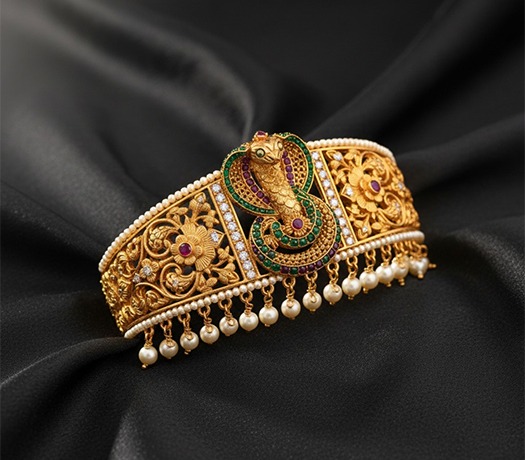
4. Vanki: The Elegant Armlet

The Vanki, also appertained to as Bajubandh, is a twisted armlet traditionally worn on the upper arm. Its design is largely emblematic, frequently featuring peacock motifs, goddess numbers, or intricate flowery patterns that echo temple architecture. drafted in gold and sometimes adorned with precious rocks, the Vanki enhances the grace and poise of a bridegroom’s arms while reflecting South Indian art. 

Historically, Vankis were worn by temple dancers and royal women, both as a mark of status and a devotional offering. Today, they continue to hold cultural significance, mainly during marriages and classical dance performances. A well styled blouse with short or cap sleeves magnificently showcases the elegance of the Vanki, making it a striking statement of antique gold jewellery.

Dazzling Floral Pattern White Stone Gold Jhumka

5. Jhumkas: The Bell-Shaped Earrings

Jhumkas are bell shaped earrings that remain one of the most familiar symbols of South Indian  godly jewellery. Inspired by temple architecture and decorated with motifs of gods, goddesses, and flowery patterns, these earrings are drafted with scrupulous attention to detail.They can be heavy or light, depending on those who wear it, their comfort and the event. 

Dating back to the Chola dynasty, Jhumkas were worn by both hop and men, reflecting charm,  meter, and devotion. Their design is protean, wearing with a simple choker or a grand Kasulaperu choker can increase any marriage vesture. The appeal of these earrings lies in their capability to capture both the luxury of history and the beauty of antique gold jewellery, casting them lasting favourites. 
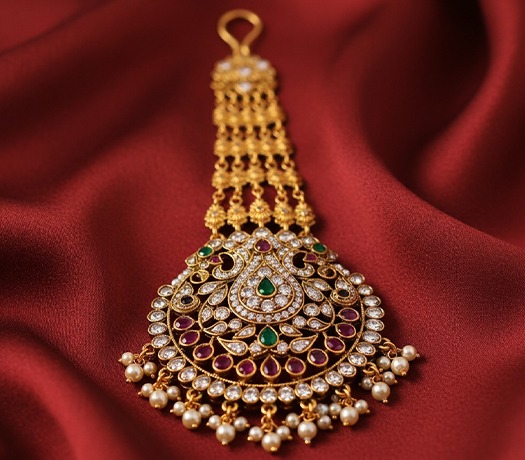
Gold Nethi Chutti

6. Nethi Chutti: The Regal Forehead Ornament

The Nethi Chutti,  frequently called Maang Tikka in North India, is an essential element of South Indian matrimonial jewellery. Worn along the central hair parting, this forehead garnishment is  generally designed with a pendant that rests on the forehead, featuring intricate deity motifs or  flowery designs. Symbolically, the Nethi Chutti highlights the third eye, representing wisdom, spiritual awakening, and protection. Historically, it was worn by queens and temple dancers to enhance their godly outlook and attitude. 

At the moment, misters can select from detailed multi strand designs or simpler single pendant performances for a mix of traditional, classic and modern appeal. Its subtle yet commanding presence increases that the Nethi Chutti remains a cherished piece of antique gold jewellery.

Trendy Sparkling Gold Bangle

7. Bangles: The Musical Bracelets

Bangles, known in South India by colorful names in different states similar as Valayal(Tamil), Gajju(Telugu), or Bale(Kannada), are a main part of temple jewellery. Made in gold and regularly enhanced with uncut stones or pearls, these bracelets are crafted to bring a soft, musical sound with each movement, a symbol of joy, festivity, and luxury. 

Heavy temple style bangles make a statement on their own, but layering them with thin gold bangles creates a beautiful,rhythmic ensemble. Worn by brides, dancers, and even devotees in temple ceremonies, these bangles symbolize the refined fusion of craftsmanship and devotion, holding their place as everlasting antique gold jewellery.

Temple Jewellery - Gold Bangles

Why Temple Jewellery Has Endured for Centuries

The enduring appeal of temple jewellery lies in its unique blend of artistry, spirituality, and cultural significance:

  1. Craftsmanship : Every piece is handcrafted by skilled artisans, often taking weeks or months to complete. Intricate carvings, filigree work, and gemstone settings reflect the mastery of generations of goldsmiths.
  2. Symbolism : Temple jewellery incorporates motifs of deities, flowers, and mythological themes, making each ornament a tribute to faith and tradition.
  3. Cultural Relevance : Beyond adornment, temple jewellery plays a role in rituals, festivals, and classical dance performances, bridging the sacred and the aesthetic.
  4. Timeless Appeal : Unlike fashion jewellery, the designs of temple jewellery remain unchanged for centuries, making them heirloom pieces passed down through generations.

Collecting or wearing antique gold jewellery in the temple style allows one to experience a tangible connection to India’s rich cultural and spiritual heritage. Each necklace, earring, armlet, or bangle tells a story of devotion, artistry, and regal elegance.

Styling Tips for Temple Jewellery

  1. Layering: Partner with a long haram with a choker or Kasulaperu to create a multi-dimensional look.
  2. Mix and Match: Amalgamate lighter chokers or bangles with heavier statement pieces for balance and beauty.
  3. Blouse Styles: Small sleeves or cap sleeves accentuate Vankis, while high-necked blouses can complement intricate necklaces.
  4. Hair Adornments: Use Jada Billas (braid ornaments) to match necklaces and earrings for a harmonious traditional marriage look.

Even outside marriages, lighter versions of temple jewellery can be worn with sarees or fusion outfits, letting the enchantress of antique gold jewellery shine in contemporary settings.

Conclusion

The seven  tabernacle jewellery pieces, Manga Malai, Kasulaperu, Vadiyanam, Vanki, Jhumkas, Nethi Chutti, and bangles, have not only survived centuries but have continued to fascinate the world with their regal fineness. Further than bare adornments, they are a glass of South India’s rich artistic heritage, devotion, and enduring art. 

Investing in antique gold jewellery in temple designs is not only a homage to tradition but also a way to carry forward the stories, artificer, and spiritual symbolism of generations. Whether you are a bridegroom, a collector, or an girlfriend of Indian art, temple jewellery promises to elevate your style while keeping the heritage of centuries alive. 

With its scrupulous detailing, godly alleviation, and unmatched charm, temple jewellery remains a dateless hallmark of grace, devotion, and regal complication, truly deserving of its place in history.


Latest Blogs
Back to College Look: Jewellery That Works for South Indian College Girls
As college reopens, finding jewellery that complements your outfit without feeling overdone can be a challenge. This guide explores simple and stylish jewellery choices for South Indian college girls, featuring practical styling tips, outfit pairings, common fashion mistakes to avoid, and affordable options for everyday campus wear. The first day back at college hits different. New notebooks, a fresh outfit, and that one question every South Indian college girl knows too well : which jewellery should I wear with my college outfit? You don't want to walk into a lecture hall dripping in gold. But you also don't want to look like you forgot you own any. And if you are wondering where to purchase gold jewellery for your first day of college, the answer is simple - Jos Alukkas. With branches across South India, you can easily find one near your college or hometown.  So without further ado, let us discuss the best jewellery choices which will make you stand out from the campus crowd. 1. Keep It Light, Keep It Meaningful  On day one, you should not miss the chance to shine. So, instead of overdoing it, pick one statement piece per outfit.  A pair of small oxidised silver jhumkis does more work than you think. They dress up a plain kurta, add warmth to a printed cotton churidar, and look just as good with a tucked-in ethnic top and jeans. They are a South Indian college girl's best friend because they're traditional enough to feel grounded and subtle enough for the classroom. For your neck, skip the heavy chokers. A thin temple pendant chain or a simple gold-tone layered necklace is all you need. It sits beautifully over a round-neck kurta and disappears gracefully under a dupatta. 2. Outfit Pairings That Actually Work * Kurta + churidar (everyday) : Small stone-drop earrings or thin gold hoops. One slim bangle or a delicate kada. Clean, easy, done.  *Block-print kurta + kolhapuris : Oxidised jhumkis and a thin silver chain. Let the print do the talking, while your jewellery adds a subtle finishing touch.  *Jeans + embroidered ethnic top : This is where you can push the boundaries a little. A slightly bigger pair of earrings, whether terracotta, beaded, or oxidised, is all you need. Effortlessly balanced.  *Cotton saree for farewell or cultural day : Now you can bring out the real pieces. A simple temple necklace, matching earrings, and a thin maang tikka if you fancy. Classic South Indian elegance that looks amazing on camera. 3. A Few Style Mistakes to Avoid  The excitement of the first day is completely understandable, but there are a few things you might want to avoid. Here are a few style pitfalls to watch out for : Do not wear long dangling earrings on lab days. Avoid stacking heavy bangles for daily college wear. Reserve bridal-inspired jewellery for events and celebrations. Choose comfort just as carefully as you choose style. Where to Shop Without Spending Too Much Not every day needs a full jewellery moment. Sometimes you just want something quick that still looks nice — a small jhumki, a gold chain, or a plain bangle you barely notice you are wearing. That is exactly the kind of thing Jos Alukkas does well, and there is plenty to pick from whether you like it simple or slightly more traditional.
June 21, 2026
Kasavu & Gold: How Kerala Saree Culture Shapes Jewellery Choices
The Kasavu saree and gold jewellery share a deep-rooted connection in Kerala’s cultural story. From cherished wedding traditions to festive celebrations, discover how this elegant pairing continues to influence jewellery choices, preserving heritage, craftsmanship, and meaningful expressions of identity through every creation at Jos Alukkas.  Elegant, meaningful, and deeply rooted in Kerala’s heritage, the Kasavu saree is much more than a traditional garment-it is a reflection of culture, pride, and cherished memories. Its iconic ivory weave and the radiant gold border have adorned generations of women during life’s most treasured occasion, somehow influencing jewellery choices that celebrate beauty and tradition. From intricate heirloom pieces to contemporary creations, the bond between Kasavu and Kerala gold jewellery keeps on inspiring distinctive styles. At Jos Alukkas, we honor this enduring connection, where every ornament carries the essence of Kerala's rich cultural legacy. The Cultural Legacy of the Kasavu Saree in Kerala The Kasavu saree kind of holds a cherished place in Kerala’s cultural heritage, it represents elegance, purity, and also a strong sense of identity, that feeling. It grew out of the older Mundum Neriyathum and now it’s become this iconic kind of symbol, worn in weddings, festivals, and other occasions that actually matter. The ivory fabric, plus that golden border, shows Kerala’s quiet love for understated beauty and tradition. Over generations, the Kasavu saree has sorta guided the selection of Kerala gold jewellery too, so it all comes together in this harmonious cultural expression, in a very natural way. Today, this celebrated attire continues to inspire women to pair it with exquisite gold jewellery that honours Kerala’s rich legacy. Kerala Wedding Gold Ornaments: Preserving Tradition Through Adornment It has always been a custom to wear jewellery during the wedding in Kerala, which symbolized blessings, prosperity, and heritage of families. They have been doing it for many years now; not as just a decorative thing but as a small sign that represents their wishes in life. -Complements the elegance of the Kasavu saree. -Passed down as cherished family heirlooms. -Mirrors the cultural and emotional significance. -Showcases Kerala’s skilled craftsmanship. -Enhances the traditional bridal look. Gold ornaments at Kerala weddings are more than just accessories, and they carry forward the rich tradition of Kerala. The Enduring Relationship Between Kasavu Sarees and Gold Jewellery Some traditions are admired, while others are genuinely felt, and the bond between the Kasavu saree and gold jewellery sits in the latter side. For generations, this iconic pairing has been stitched into Kerala’s most cherished moments, it mirrors grace, prosperity, and cultural pride, in a way that is hard to explain. The plainness of the Kasavu saree somehow makes the craft of Kerala gold jewellery feel even more vivid. Together they craft a look that is heartfelt and also neatly composed. Even if fashion keeps shifting and going forward, this treasured connection stays as it is still moving the tales of heritage, celebration, and personal identity from one generation to the next. Why Choose Jos Alukkas for Kerala Gold Jewellery? When gold jewellery meets the quiet elegance of the Kasavu saree, something a bit more happens than just matching colors. You know, it feels like the heart of Kerala history and culture starts showing, almost right away. That sacred link between the Kasavu and gold has been carried for generations, worn and passed along, especially in Kerala wedding gold ornaments, which bring real cultural weight and emotional warmth. Step by step, these together turn life's biggest moments into signs of inheritance, dignity, and an enduring kind of workmanship , not only beautiful but also meaningful. At Jos Alukkas we honor this cultural bond with jewellery that kind of mirrors the elegance, the feelings, and the traditions of Kerala. You’ll find heritage-inspired designs, alongside bridal collections so exquisite, and each item is made to pair well with the beauty of the Kasavu saree. It is really rooted in trust, quality, and fine craftsmanship and Jos Alukkas helps you celebrate every event ,with jewellery that keeps the warmth of tradition and also the pride of Kerala’s enduring legacy.
June 18, 2026
What Your Favourite Jewellery Says About Your Personality
The jewellery you choose often says more about you than you might realise. From timeless traditional designs to modern statement pieces, every preference reflects a unique aspect of your personality, style, and values. Explore what your favourite jewellery reveals about you and discover the connection between personal expression and the pieces you love most. Have you ever wondered why you are naturally drawn to certain types of jewellery while someone else prefers something completely different? Jewellery is more than just an accessory. The styles we choose often reflect our personality, preferences, and the way we express ourselves. Whether you love traditional designs, modern pieces, or bold statement jewellery, your choices can reveal interesting insights about your character. At Jos Alukkas, we believe that every jewellery collection tells a unique story, and understanding these preferences can help us appreciate our personal style even more. Jewellery and Personal Expression Jewellery has always been a way for people to showcase their individuality. While fashion trends may change over time, people often gravitate towards styles that align with their personality. Some prefer timeless designs that never go out of style, while others enjoy experimenting with the latest jewellery trends. These choices often reflect not only personal taste but also values, lifestyle, and confidence. If You Love Traditional Jewellery People who prefer traditional style jewellery are normally into culture, tradition and heritage. They appreciate the craftsmanship and great art that have been long admired and loved for. Not everybody loves traditions, sentimental values, and elegance that never fades away. Jewellery is an ideal item that can be chosen by people who are interested in such attributes.  This is one of the reasons why gold jewellery is often preferred by those who value tradition, as it beautifully reflects heritage, culture, and enduring beauty.  If Modern Jewellery Is Your Style Modern jewellery lovers prefer sleek lines, elegance, and innovation. They adapt very easily and they accept changes. Also they are fashionable, as they have accessories that can complement their daily life. Such people like seeing their personality reflected in the design and appreciate elegant jewellery. If You Prefer Classy and Elegant Pieces There are those who naturally gravitate towards elegant jewellery. They look for such jewellery that can match all kinds of situations but will always remain stylish. People with such tastes value elegance, quality, and confidence. Unlike trend chasers, such people pay more attention to purchasing stylish jewellery that won’t go out of style any time soon. If You Love Bold and Statement Jewellery The statement jewellery tends to target those personalities who are comfortable about themselves and don’t hesitate to showcase their feelings through their own personal design choices. Accessories serve as their medium for creating a striking image, and no one can prevent them from doing so by being innovative in this sphere. These individuals possess character through clothes. However, many times, such individuals pay attention to the latest fashion trends and like experimenting with their style when it comes to jewellery.  The Rise of Online Jewellery Shopping Today, matching jewellery with one’s personality is easier than before. The increase in online gold jewellery shopping has enabled people to have more choice according to their personal interest. No matter whether someone likes to wear traditional jewellery or wants to make a statement through stylish jewellery, people can check the vast collections of gold jewellery online.  Your Jewellery Reflects Your Personality While jewellery choices cannot completely define a person, they often provide valuable insights into individual tastes and lifestyles. Whether you are drawn to classic gold jewellery, modern designs, or the latest jewellery trends, your preferences help tell your unique story. At Jos Alukkas, we celebrate every personality through thoughtfully crafted collections designed to suit different styles and occasions. After all, the jewellery you choose is not just something you wear. It is a reflection of who you are.
June 15, 2026
Antique Gold Finish vs Polished Gold: Which Is Ruling 2026?
Gold remains a timeless favourite in 2026, with antique and polished finishes emerging as two popular styles. While antique gold appeals through its vintage charm and traditional craftsmanship, polished gold stands out with its modern brilliance and shine. This article compares both finishes and helps readers choose the style that best matches their preferences. Trends may come and go, and new metals may emerge, but gold continues to hold its ground. Its value has been treasured for years on end and it remains the most preferred choice among jewellery lovers across the globe. In 2026, recent trends show no signs of gold slowing down, and there has been growing debate over one question: Antique or Polished—which is ruling this year? At Jos Alukkas, we have witnessed a growing demand for both styles, with each offering a distinct character and appeal. While some are fascinated by the vintage  and intricate detailing of antique jewellery, others prefer the captivating sparkle and trendy appeal of polished designs. So, which one is making a bigger statement in 2026? Let's take a closer look. What Is Antique Gold Finish? An antique gold finish is a treatment that is applied on jewellery, or even home decor pieces to make them look dull, aged and rustic. It is basically carried out to imitate the vintage beauty of gold jewellery. However, there are certain processes that are conducted to give them a nostalgic look, some of which are outlined below :  1. Creating a traditional design Designers use motifs inspired by :   Temple art  Royal jewellery Floral patterns In some cases even combine peacocks, deities and other heritage elements to revoke the essence of the past. 2. Casting or handcrafting the jewellery The gold is melted to create the jewelry in the desired shape using moulds, casting, or handmade methods. 3. Applying the antique finish  This is the crucial stage. Jewellers employ various methods like oxidation, patination and other methods to darken specific portions of the jewellery, thus giving it an aged look. What Is Antique Polished Gold? Polished gold refers to pieces of jewellery whose surfaces have been processed with the aim of bringing out their natural lustrousness. While antique gold usually undergoes treatment aimed at giving it a dark finish to create a vintage effect, polished gold should remain bright, shiny and slightly reflective. This type of gold jewellery has an appealing surface which is achieved through buffing and polishing processes by leveraging appropriate equipment and polishing agents. Through this process, minor imperfections on the surface of the material can be removed, hence bringing out the natural lustre of the material in a rather pristine manner. As a result, polished gold jewellery becomes extremely reflective and suitable for modern-day fashion. Head-to-head Comparison Feature Antique Gold FinishPolished GoldAppearanceWarm, aged, darkened with patinaBright, shiny TextureMatte to semi matteSmooth, high gloss Jewellery StyleFiligree, engraved, heirloom, ornateSleek, sculptural, statement Stone PairingsRubies, emeralds, pearls, morganiteDiamonds, sapphires, clear gemstones MaintenanceLow — patina naturally hides wearHigh — prone to scratches and smudges DurabilityAges beautifully over timeRequires regular polishing to maintain shine  The Best Choice Depends on You  When it comes to gold jewellery, it is difficult to decide which one is the winner. Both have their own merits and limitations, and determining which one is better entirely depends on the wearer's choice. Antique gold continues to win hearts of those in love with gold jewellery that reminds them of the good old days. Polished gold on the other hand remains the favourite of those who like contemporary designs. Be it antique or polished, at Jos Alukkas you will find an exciting collection of both styles in a variety of designs and across different price ranges.
June 13, 2026