>
7 Timeless Temple Jewellery Pieces of Antique Gold Jewellery

Temple jewellery is not just a style of decoration, it is a celebration of heritage, love, devotion, and craftsmanship. Among the myriad forms of traditional Indian jewellery, antique gold jewellery in the temple style stands out for its high cultural significance and complex craftsmanship. Deep rooted in the spiritual and creative traditions of South India, temple jewellery has transcended decades, adorning kings, queens, dancers, and brides alike. These gems, inspired by temple architecture and godly motifs, mirror an era where jewellery was not merely ornamental but an indicative gesture of faith and grandeur.

In this we explore seven temple jewellery pieces that have ruled for centuries, offering a best and perfect blend of history, elegance, and lasting appeal. Whether you are a bride being ready for your marriage, a collector of antique gold jewellery, or simply fascinated by India’s regal adornments, this guide will brighten the long lasting beauty of temple jewellery.

Traditional Manga Necklace

1. Manga Malai: The Mango Motif Necklace

The Manga Malai, also known as the Mango Mala, is an iconic South Indian temple jewellery necklace. Named after its distinctive mango- shaped motifs, this piece is a testament to artificer and design invention. Traditionally designed in gold, the mango motifs are frequently speckled with uncut diamonds, kemp stones, and plums, creating a striking mix of fineness and spirituality. 

The origin of the manga malai dates back to the Chola period, where it was worn by queens and  temple dancers to signify substance and godly grace. Now, brides favor heavier versions for marriages, partnered with a Kanjeevaram saree for a regal look, or conclude for simpler designs for reuse during special occasions. 

Wearing a Manga Malai is more than just a choice of fashion, it is an emotion and embrace of South Indian tradition, showcasing how antique gold jewellery amalgamates historical significance with aesthetic appeal.

Charming Traditional Lakshmi Necklace

2. Kasumala: The Coin Necklace of Royalty

It is also called Kasulaperu, is another celebrated temple jewellery piece, synonymous with wealth and godly blessings. Traditionally, this choker features a series of Goddess Lakshmi coins hanging together on a chain, often highlighted with kemp stones, uncut diamonds, and other valuable gemstones. The design releases luxury, making it a must have for South Indian newly wed focusing for a majestic bridal ensemble.

Historically, Kasulaperu was not just a piece of decoration but also a sign of wealth and spiritual devotion. The coins represented prosperity, while the goddess motif invoked blessings for fertility, health, and abundance.

In contemporary styling, brides can partner a long Kasulaperu with a smaller necklace for subtle elegance or select two-layered or pendant embedded designs for grandeur. The versatility of this necklace makes sure that it remains a treasured example of antique gold jewellery passed down through ages.
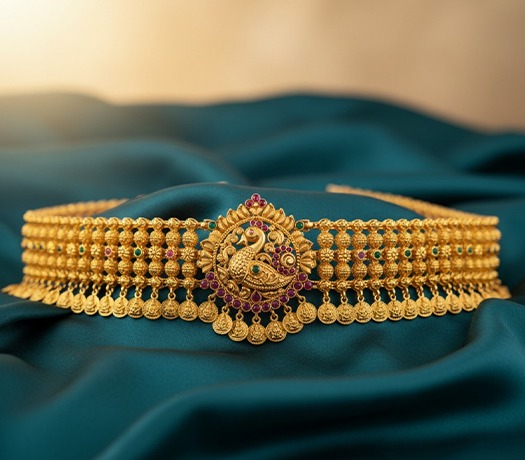
Gold Vadiyanam

3. Vadiyanam: The Majestic Waist Belt

The Vadiyanam, also known as the Oddiyanam, is an exquisitely crafted waist belt that incorporates South Indian bridal fineness. Traditionally worn around the waist to secure a saree or lehenga, it is decorated with complex pictures of deities, peacocks, flowery patterns, and gemstones alike to rubies and emeralds.

 A classical design frequently showcases Goddess Lakshmi reclining on a lotus at the center, emblematizing luxury, grace, and  godly protection. This piece of antique gold jewellery is more than ornamental. Its appearance increases the overall posture and poise of a bride, making a visual symmetry with other temple jewellery pieces like the necklace or long haram. 

Historically, Vadiyanam was a mark of royalty and divinity, worn by queens and dancers during chief ceremonies. Even now, its grandeur continues to make it a centerpiece in marriage jewelry.
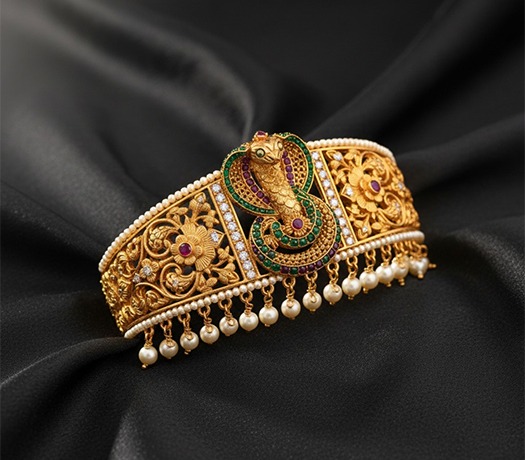
4. Vanki: The Elegant Armlet

The Vanki, also appertained to as Bajubandh, is a twisted armlet traditionally worn on the upper arm. Its design is largely emblematic, frequently featuring peacock motifs, goddess numbers, or intricate flowery patterns that echo temple architecture. drafted in gold and sometimes adorned with precious rocks, the Vanki enhances the grace and poise of a bridegroom’s arms while reflecting South Indian art. 

Historically, Vankis were worn by temple dancers and royal women, both as a mark of status and a devotional offering. Today, they continue to hold cultural significance, mainly during marriages and classical dance performances. A well styled blouse with short or cap sleeves magnificently showcases the elegance of the Vanki, making it a striking statement of antique gold jewellery.

Dazzling Floral Pattern White Stone Gold Jhumka

5. Jhumkas: The Bell-Shaped Earrings

Jhumkas are bell shaped earrings that remain one of the most familiar symbols of South Indian  godly jewellery. Inspired by temple architecture and decorated with motifs of gods, goddesses, and flowery patterns, these earrings are drafted with scrupulous attention to detail.They can be heavy or light, depending on those who wear it, their comfort and the event. 

Dating back to the Chola dynasty, Jhumkas were worn by both hop and men, reflecting charm,  meter, and devotion. Their design is protean, wearing with a simple choker or a grand Kasulaperu choker can increase any marriage vesture. The appeal of these earrings lies in their capability to capture both the luxury of history and the beauty of antique gold jewellery, casting them lasting favourites. 
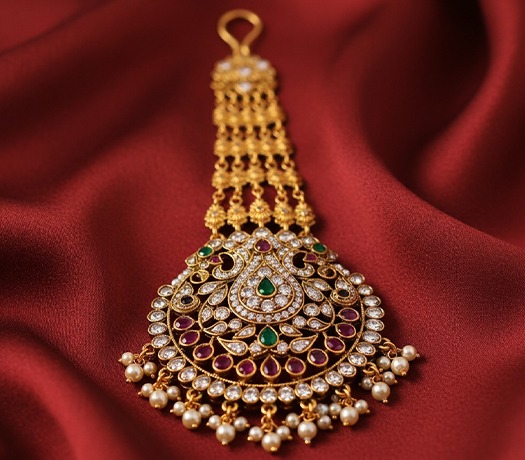
Gold Nethi Chutti

6. Nethi Chutti: The Regal Forehead Ornament

The Nethi Chutti,  frequently called Maang Tikka in North India, is an essential element of South Indian matrimonial jewellery. Worn along the central hair parting, this forehead garnishment is  generally designed with a pendant that rests on the forehead, featuring intricate deity motifs or  flowery designs. Symbolically, the Nethi Chutti highlights the third eye, representing wisdom, spiritual awakening, and protection. Historically, it was worn by queens and temple dancers to enhance their godly outlook and attitude. 

At the moment, misters can select from detailed multi strand designs or simpler single pendant performances for a mix of traditional, classic and modern appeal. Its subtle yet commanding presence increases that the Nethi Chutti remains a cherished piece of antique gold jewellery.

Trendy Sparkling Gold Bangle

7. Bangles: The Musical Bracelets

Bangles, known in South India by colorful names in different states similar as Valayal(Tamil), Gajju(Telugu), or Bale(Kannada), are a main part of temple jewellery. Made in gold and regularly enhanced with uncut stones or pearls, these bracelets are crafted to bring a soft, musical sound with each movement, a symbol of joy, festivity, and luxury. 

Heavy temple style bangles make a statement on their own, but layering them with thin gold bangles creates a beautiful,rhythmic ensemble. Worn by brides, dancers, and even devotees in temple ceremonies, these bangles symbolize the refined fusion of craftsmanship and devotion, holding their place as everlasting antique gold jewellery.

Temple Jewellery - Gold Bangles

Why Temple Jewellery Has Endured for Centuries

The enduring appeal of temple jewellery lies in its unique blend of artistry, spirituality, and cultural significance:

  1. Craftsmanship : Every piece is handcrafted by skilled artisans, often taking weeks or months to complete. Intricate carvings, filigree work, and gemstone settings reflect the mastery of generations of goldsmiths.
  2. Symbolism : Temple jewellery incorporates motifs of deities, flowers, and mythological themes, making each ornament a tribute to faith and tradition.
  3. Cultural Relevance : Beyond adornment, temple jewellery plays a role in rituals, festivals, and classical dance performances, bridging the sacred and the aesthetic.
  4. Timeless Appeal : Unlike fashion jewellery, the designs of temple jewellery remain unchanged for centuries, making them heirloom pieces passed down through generations.

Collecting or wearing antique gold jewellery in the temple style allows one to experience a tangible connection to India’s rich cultural and spiritual heritage. Each necklace, earring, armlet, or bangle tells a story of devotion, artistry, and regal elegance.

Styling Tips for Temple Jewellery

  1. Layering: Partner with a long haram with a choker or Kasulaperu to create a multi-dimensional look.
  2. Mix and Match: Amalgamate lighter chokers or bangles with heavier statement pieces for balance and beauty.
  3. Blouse Styles: Small sleeves or cap sleeves accentuate Vankis, while high-necked blouses can complement intricate necklaces.
  4. Hair Adornments: Use Jada Billas (braid ornaments) to match necklaces and earrings for a harmonious traditional marriage look.

Even outside marriages, lighter versions of temple jewellery can be worn with sarees or fusion outfits, letting the enchantress of antique gold jewellery shine in contemporary settings.

Conclusion

The seven  tabernacle jewellery pieces, Manga Malai, Kasulaperu, Vadiyanam, Vanki, Jhumkas, Nethi Chutti, and bangles, have not only survived centuries but have continued to fascinate the world with their regal fineness. Further than bare adornments, they are a glass of South India’s rich artistic heritage, devotion, and enduring art. 

Investing in antique gold jewellery in temple designs is not only a homage to tradition but also a way to carry forward the stories, artificer, and spiritual symbolism of generations. Whether you are a bridegroom, a collector, or an girlfriend of Indian art, temple jewellery promises to elevate your style while keeping the heritage of centuries alive. 

With its scrupulous detailing, godly alleviation, and unmatched charm, temple jewellery remains a dateless hallmark of grace, devotion, and regal complication, truly deserving of its place in history.


Latest Blogs
How to Buy Jewellery Online Safely
Online jewellery shopping offers the excitement of discovering a beautiful piece from the comfort of home. But when the product cannot be held, examined or tried on, confidence becomes just as important as the design itself. Knowing what to check can make every online jewellery purchase safer, smarter and more reassuring. A beautiful piece of jewellery can catch your attention in seconds. You may be casually browsing online when a particular necklace, ring or bracelet suddenly makes you stop and look twice. At Jos Alukkas, online jewellery shopping brings that experience closer, making it easier to explore designs and find something that feels just right. However, one thing remains, which may break the enthusiasm right away – Is it possible to trust your purchase? Different from the situation when one buys jewellery at a store, in the first case, the buyer will not have the opportunity to hold or touch the product, examine its quality and try them on. Nonetheless, it should not be considered as a danger while buying jewellery online. It all depends on one’s knowledge about it. Some simple checks will help to make your online jewellery buying process much safer and more confident. Start With the Jeweller Before you fall in love with a design, take a moment to look at who is selling it. Select a jeweller who has been in business for a long time and has relevant information about the company available to customers. Customer reviews may provide further insights into how a jeweller does business and delivers. A website that looks professional alone will not be sufficient. The jeweller must be open to all information related to its products and service policies. After ensuring the credibility of the seller, one may proceed to the selection of jewellery. Look Beyond the Photograph A photograph can show you how beautiful a piece looks, but it cannot tell you everything you need to know. Read through the product description very well to note down the material used, purity of the metal, weight, dimensions and any other information concerning the stones that will be on the piece. In the case of gold jewellery, find out if it is 18K or 22K. For diamond jewellery, find information related to the diamond. And if any doubt arises, get in touch with the jeweller before purchasing the piece. Check Hallmarking and Certification When buying precious jewellery, authenticity matters. Make sure to have an appropriate hallmark or certification based on the type of jewellery that you will be buying. This may give you some insight into the important characteristics of the metal or gemstones. This becomes even more necessary when you are investing quite heavily into a particular piece of jewellery. Don’t Let the Price Decide Alone  An attractive price can make you want to complete a purchase immediately. But before you do, look a little closer. Understand what the final price includes. Depending on the piece, it may cover the metal value, making charges, gemstones, taxes and other applicable costs. If a price seems unusually low, ask why. It is possible to analyze the same items by other well-known jewellers, thus, getting an idea if the price is adequate. In case you get what you paid for, you feel satisfied; otherwise, there will always be some doubts. Read the Policies Before Buying Once you have found a design you love, it is easy to overlook the terms and conditions. Do not skip them. Always read about the return, exchange and refund policies prior to purchasing. In addition, read about delivery times, and know what will happen if the jewellery arrives damaged or if it is different from what was purchased. All of these things can be overlooked if nothing goes wrong, but they can make all the difference if anything does. Make Your Payment Securely Finally, make the payments using the jeweller’s official website or any secure gateway for payments. Do not use unknown links, and never provide your financial details using unknown methods. Once your order has been placed, store your confirmation and purchase details until you receive the jewellery. The Safest Purchase Is an Informed One There is no need to compromise between convenience and reliability when buying jewellery online. With a reliable jeweller, knowledge of the specifications of the product, knowledge of hallmarking and certifications, comparison of prices and safe payment, one can purchase jewellery online. At Jos Alukkas, the online jewellery purchase becomes easy as it becomes convenient to explore different designs and make a selection that suits your needs. This is because when purchasing jewellery, which is an investment, it is equally important to know what you are buying. After all, discovering the perfect piece should be exciting. And when it arrives at your doorstep, that excitement should come with the confidence that you made the right choice.
September 22, 2026
Platinum vs White Gold: Which Is Better for Engagement Rings?
Choosing an engagement ring is one of those decisions where the smallest details can make a lasting difference. Beyond the diamond, the metal you choose affects the ring’s appearance, feel, durability and everyday maintenance. That is why understanding platinum vs white gold can help you make a more confident choice. At Jos Alukkas, both metals offer a sophisticated look for engagement rings, but each comes with its own character and practical advantages. So, which one makes more sense for you? From durability and appearance to maintenance and everyday wear, let’s break down the key differences before you choose the ring you’ll wear for years. An engagement ring is never really just about the diamond. The metal underneath decides how it looks, how it feels on your hand, how well it survives daily life, and how much work it'll need down the road. Which is exactly why platinum vs white gold deserves some actual thought before you commit to something this permanent. At Jos Alukkas, both metals give you that clean, elegant white look most engagement-ring buyers want. They are not the same underneath, though - and once you understand what actually separates them, the decision gets a lot easier. It comes down to your lifestyle, your taste, what you want from this ring ten years from now. Platinum vs White Gold: What Is the Difference? Platinum is naturally white. Dense. Typically used in high-purity alloys. White gold gets its white colour differently - gold mixed with other metals, the exact ratio varying piece to piece. Both make for a genuinely elegant setting. Where they actually part ways is in how each holds up after years on your hand, every day, without a break. Platinum vs White Gold: Durability Care most about long-term wear? Platinum usually wins that argument. It's dense, tough, built for a ring that's never coming off. Scratch it, and the metal doesn't vanish - it just shifts across the surface, which over time gives platinum that distinctive patina people either love or don't notice at all. White gold holds up fine too, but the alloy and finish change how it ages. Design, how often you wear it, your actual day-to-day life - all of it factors in. Worth sitting with this one a while if the ring's staying put for decades. Appearance: Platinum vs White Gold Side by side, they can look almost identical. Platinum's white, full stop - nothing added to get there. White gold needs the alloy mix plus, often, a rhodium coating layered on top for that bright, almost mirror-like shine. That coating wears thin eventually. Regular use does it. Which means white gold often needs re-plating at some point to bring the shine back. Platinum skips all that. It's white on its own, and instead it just picks up a softer patina over the years - something a lot of people end up genuinely liking about it. Maintenance and Everyday Wear This is really where the two diverge. Platinum asks less of you day to day. Its colour was never riding on a coating in the first place. A professional clean and polish now and then covers most of it. White gold might need rhodium re-plating eventually, depending on wear and the specific piece. Something to weigh in if regular finishing work isn't something you want to think about. Sensitive skin? Ask about the exact alloy before buying anything. Some white-gold mixes contain nickel - and not every white-gold ring is built the same way underneath. Which Is Better for an Engagement Ring? Honestly, there's no universal answer. Depends entirely on what matters to you. Go platinum if you're after : High-purity precious-metal content Density and genuine long-term durability A white colour that's natural, not applied Less need for periodic re-plating A ring that feels substantial on the hand Go white gold if you're after : The familiar, classic white-metal look Something lighter on the hand than platinum More design range across different gold alloys That bright, rhodium-finished shine Gold specifically as the metal underneath it all Lifestyle matters just as much as any of that. Wearing this ring nonstop? Weigh durability and upkeep right alongside how it looks and what it costs. Find the Right Engagement Ring at Jos Alukkas It was never really "platinum or white gold" as a question. It's which one actually fits the ring you're planning to wear every single day, for years. At Jos Alukkas, explore both - platinum and white gold - and compare how each looks, feels, and ages before deciding anything. Platinum's lasting character or white gold's bright finish, whichever pulls you in, the ring should feel just as meaningful as what it's standing for.
September 20, 2026
Best Silver Jewellery Pieces to Build a Versatile Collection
A jewellery collection does not have to be overflowing to feel complete. Often, it is the carefully chosen pieces - the ones that work with your everyday wardrobe, complement different occasions, and never feel out of place - that become the most valuable. Silver jewellery makes building that kind of collection wonderfully easy. From classic studs and delicate chains to elegant pendants, bracelets, rings and anklets, the right pieces can be styled in countless ways. At Jos Alukkas, discover silver jewellery designed to bring versatility, personality and timeless appeal to your jewellery box, helping you create a collection you will enjoy wearing again and again. Owning more jewellery is not really the goal - owning the right pieces is. That's the whole case for silver jewellery, honestly. A few well-chosen pieces from Jos Alukkas can carry you from a regular Tuesday to a proper evening out, no fuss involved. Get the basics right and you'll keep finding new combinations in your own drawer, months after buying anything new. Why Silver Jewellery Belongs in Every Collection Silver has this understated quality to it - easy to style, hard to get wrong. Everyday outfits, work clothes, festive wear, dressed-up occasions - it does not clash with much of anything. What separates the genuinely good pieces from the rest? You should be able to :- Wear it constantly without ever feeling overdressed Pair it with both traditional and modern outfits Wear it solo or stack it with other pieces Move it from a 9am meeting to a dinner reservation Keep wearing it years later, even as your taste changes That's really the whole pitch for silver as a starting point. 1. Classic Silver Stud Earrings Studs are close to non-negotiable. Clean, simple, they slide into an everyday outfit without a thought, and somehow still hold their own when things get more formal. Round and plain ages the best, honestly. Want a bit more shine? A small stone accent or subtle detailing does it without going overboard. 2. Silver Hoop Earrings Once studs start feeling a bit too safe, silver hoops are the obvious next move. Small ones work fine day to day; bigger, bolder ones can practically style the outfit for you. Their real trick? Turning something plain into something that looks intentional - with almost no effort on your part. 3. A Fine Silver Chain Necklace Hard to overstate how much a fine chain earns its keep. Bare, it's minimal. Add a pendant and it's got character. Layer a second necklace over it and suddenly there's depth to the whole thing. It's simple enough to work with a shirt and trousers just as easily as it works with something traditional - it just doesn't fight anything else you're wearing. 4. A Silver Pendant Necklace This is where actual personality shows up. Geometric and minimal, a symbolic shape, something with a small gemstone, a charm that means something only to you - take your pick. More often than you'd expect, this becomes the piece that isn't just worn but actually means something - tied to a memory, an occasion, a person. 5. A Versatile Silver Bracelet A slim silver bracelet rounds off a look quietly, never loudly. Solo, it's understated. Stacked with a watch or a couple of other delicate pieces, it's a bit more of a statement. For daily wear, comfort matters more than most people plan for - go for proportions that fit your actual wrist, not just what looks nice in a photo. 6. Stackable Silver Rings Rings are where you get to play a little. Thin bands, textured finishes, sharp geometric shapes - wear any of them alone, or pile a few together. Start with one or two you'll genuinely reach for. Build from there, slowly. That way your collection tracks your own taste, not whatever's trending this particular month. 7. Silver Anklets and Toe Rings Already covered earrings, necklaces, and rings? Anklets and toe rings are worth adding into the mix. Small detail, real impact - especially with open footwear or traditional outfits. How to Build a Versatile Silver Jewellery Collection No need to buy all of it at once. Start with what you'll actually wear, then build outward from there as new pieces open up more combinations. A decent starting point :- Everyday: silver studs + fine chain Smart casual: hoops + pendant necklace Festive: pendant + bracelet + rings Elegant evening: statement earrings + bracelet Traditional: silver anklet + toe rings + complementary jewellery Quality, finish, comfort, design, versatility - all of it matters more than it seems like it should at first glance. Sterling silver specifically? Check the purity and product details are actually stated clearly before you buy anything. Find Your Silver Jewellery Essentials at Jos Alukkas Size was never really the point of a good collection - wearability is. Studs, hoops, chains, pendants, bracelets, rings, anklets, toe rings - put together with a bit of thought, and there's a piece here for nearly every part of your week. At Jos Alukkas, the silver jewellery on offer holds onto that timeless quality while still feeling current. Starting your first collection, refreshing an old one, or just hunting for one meaningful piece to add - either way, it's worth taking the time to find what actually feels like you. Discover silver jewellery at Jos Alukkas, and build something you'll genuinely want to keep coming back to.
September 18, 2026
Traditional vs Modern Silver Jewellery Designs 
Silver jewellery has a way of fitting into both tradition and modern style. From detailed oxidised pieces inspired by heritage crafts to sleek designs made for everyday wear, there is plenty to choose from. But the differences go beyond appearance. Understanding how traditional and modern silver jewellery vary in design, finish, craftsmanship, and purpose can make it easier to find a piece that suits your style and the occasion. Every jewellery collection today carries two kinds of stories. Some pieces are rooted in old craft and symbolism. Others are shaped by what people want to wear right now, on an ordinary day. Silver jewellery shows this split clearly, and knowing what separates the two helps when deciding what to buy next. Jos Alukkas offers pieces at both ends of the range. You can find darker, oxidised temple style items, and you can also spot brighter silver designs. Seeing how the two types differ can help you choose the better one for the moment you need. The Character of Traditional Silver Pieces The tradition of silver work has relied on skills that have been practised for decades, such as filigree, carving by hand, and oxidized finish, to name a few. The temple-style jewellery and patterns inspired by tribes are examples of this craft tradition. Common features include: Motifs drawn from nature, such as peacocks, vines, and flowers Symbols tied to religion or regional culture A darkened, oxidised look rather than a bright shine Heavier builds with more detail packed in How Modern Silver Designs Have Shifted In recent times, simplicity is the hallmark of silver jewellery. The thin lines and minimalist design give this jewellery an easy-to-wear feel. The designs of many silver jewellery products available today borrow ideas from western designs, geometric patterns, or abstract forms. This style suits: Office wear or casual outings Stacking several pieces at once Younger buyers who want something understated Mixing with both ethnic and western clothing Most modern pieces have a bright, glossy finish and tend to run smaller and lighter than older styles. Old vs New Silver Jewellery at a Glance FeatureTraditional StyleModern StyleLook Ornate, symbol-drivenSimple, streamlinedFinish Oxidised, antiqueBright polishWorn forWeddings, festivalsDaily use, casual settingsBuildHeavierLighterCraft MethodFiligree, hand carvingMachine-made, basic castingPreferred byOlder generation, cultural eventsYounger buyers, everyday wear Caring for Silver, Traditional or Modern Maintenance of the two kinds of jewellery varies slightly. An antique oxidized piece of jewellery should maintain its dark color, hence there is no need to clean it using strong cleaning agents since they could wash away the antique finish. This kind of jewellery can just be cleaned using a dry piece of cloth once it is worn. Modern pieces of jewellery, on the other hand, will also acquire tarnishes but polishing cloths restore their shine in seconds. Blending Both Styles Many people have been merging both styles together without giving it a second thought. An oxidized bangle with a contemporary chain or a temple pendant with an western dress style has become a very common thing to see. This combination allows a person to be culturally tied but still fashionable at the same time. Deciding What Works for You The right pick depends on how often the piece gets worn and what it's for. For weddings or festivals, traditional designs still hold more cultural value. For daily use across different outfits, modern silver pieces are the more practical choice. One style isn't pushing out the other. Each simply covers a different part of how people actually wear jewellery.
September 17, 2026